Capy Castaway Capy the Capybara Pup
Nose first, hat second, home eventually.
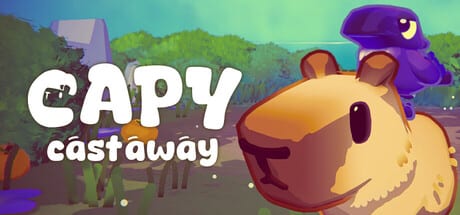
Capy is the grounding presence of Capy Castaway—a curious capybara pup washed onto Castaway Island after a devastating flood. Kitten Cup Studio and publisher Big Blue Sky describe Capy as silent, impressionable, and friendly, exploring by digging, pushing, sniffing out secrets, swimming where shores allow, and wearing almost anything as a hat. The full Steam adventure arrives August 6, 2026. If you like tactile discovery, Capy will feel like your main even when you also command Corvi.
Capy’s fantasy is nose-first sincerity. The pup does not explain the world in monologues; Corvi supplies most words while Capy supplies physical choices—help, ignore, dig anyway, swim anyway, wear the ridiculous bucket anyway.
Core verbs
- Sniff: Reveal interesting trails, buried junk, treasure-adjacent oddities, and gossip the UI never spells out.
- Dig: Unearth what sniffing promised—or comedically failed to promise—turning soft ground into story beats.
- Swim: Cross water that would stop a less amphibious hero; pair with Corvi scouting for exit ledges.
- Push: Shove world props that gate paths, activate jokes, or reposition fetch targets for the crow.
- Wear hats: Turn found objects into headwear. Marketing treats hats as core fantasy, not a side meme—some reactions may be cosmetic, others may unlock dialogue or tone shifts. Experiment and log results.
Flight, long-distance retrieval, and carry routes belong to Corvi. Keeping verbs separated prevents co-op arguments and solo confusion.
How Capy teaches the game
Early minutes should be spent smelling everything polite society ignores—garden edges, dock mud, market corners. Dig spots train you to trust optional interactions even when quest arrows point elsewhere. Hats teach that “useless” items may still change NPC reactions or simply delight you; that delight is onboarding, not distraction.
The demo’s Swallow Town quests reinforce delivery and care loops where Capy’s body does the helping while Corvi fetches what shelves cannot reach. Those habits scale to the wider island after launch.
Sniff and dig rhythm
Treat sniffing as asking a question and digging as listening to the answer. If sniffing highlights nothing, scout with Corvi before assuming the space is empty—some trails start on rooftops and only make ground sense after a fetch.
When stuck on a gate, ask whether you skipped a pushable prop, a swim approach, or a hat conversation. Puzzle Basics reframes the same idea for puzzle-language learners.
Solo tips
When playing alone, park Corvi with a view of the next ledge, then commit to Capy’s ground loop. If you forget to sniff for ten minutes, you are probably missing half the island’s gossip. Revisit sniff circles after story beats—NPC schedules and props can change what smells interesting.
Character switching should happen at decision points, not only at hard locks. Optional dig stashes and hat props reward tourists who backtrack with patience.
Co-op tips
Capy players should narrate dig targets clearly and ask Corvi for aerial confirmation before long swims. Carry requests go to your partner—see Corvi and Duo Combos. Keep Controller or Keyboard & Mouse comfortable so interact spam does not cramp thumbs during Soup Competition evenings.
If your table loves chaos, announce hat swaps before serious deliveries so partners know delays are intentional comedy.
Hats as social verb
Hats are not just screenshots—they are a way to re-open conversations. When an NPC ignores you, check whether a nearby object wants to sit on Capy’s head, then try dialogue again. Track discoveries on Hats and the Collectibles Checklist.
Do not let hat hunting skip Help Castaways requests unless your group agreed comedy outweighs kindness tonight.
Story role
Capy’s silence makes room for player projection and for Corvi’s commentary. Choices about helping castaways happen through Capy’s body—deliveries, nudges, refusals, standing still while someone argues. Log bigger decisions in the Endings Tracker especially when you refuse help to chase a dig streak.
Marketing teases a mysterious Dragon separately from the playable duo. Capy remains the ground anchor at launch—expect Dragon content as story mystery, not a confirmed third playable character without official word.
Inspiration notes
The project draws energy from Toronto’s real runaway capybaras and from cozy places the developers remember—High Park Zoo lore, skyline memory, storefronts that vanished but linger emotionally. You do not need the history to enjoy dig spots, but it flavors why Castaway Island feels oddly familiar. Toronto Easter Eggs collects hunt ideas without heavy spoilers.
Related pages
Characters Hub, How to Play, Getting Started, Locations Hub, Exploration Tips.
Play Capy when you want the island at nose level—muddy, funny, and sincere enough to carry a flood-survival homecoming.
Frequently Asked Questions
Quick answers to the most common questions.
Does Capy speak?
Official bios describe Capy as largely silent. Corvi supplies most spoken dialogue while Capy expresses through actions and hats.
Are hats cosmetic only?
Marketing highlights hats as a headline interaction. Some may be purely cosmetic; others may affect NPC reactions—experiment and note outcomes.
Can Capy fly or fetch?
Flight, fetch, and carry are Corvi's aerial verbs. Capy covers sniff, dig, swim, push, and hats.
Is Capy good for kids in co-op?
Ground verbs are readable and tactile. Pair with an adult or sibling on Corvi for fetch callouts—see [Co-op Setup Checklist](/tools/coop-setup/).
Best first guide after this page?
Continue with [Getting Started](/guides/getting-started/) for first-hour routing on Castaway Island.
Steam Deck notes for Capy?
Handheld play suits short dig-and-sniff sessions. Read [Steam Deck Tips](/controls/steam-deck/) for suspend and control tweaks.